
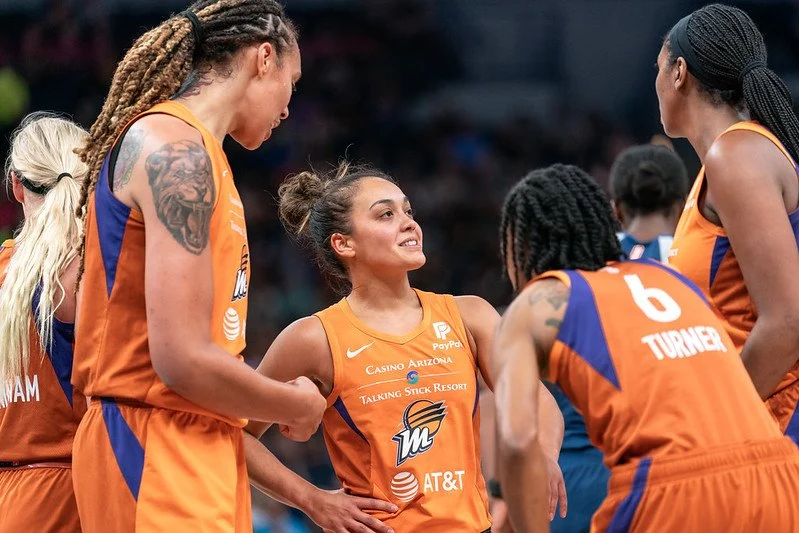
When it comes to professional basketball, physical attributes such as speed, agility, and skill are essential. However, height has always been a major talking point, especially in women’s basketball. The average height for WNBA players offers a fascinating look at how the league has evolved and why size still matters in shaping positions and performance.
This article explores how tall most WNBA athletes are, the differences between playing positions, comparisons with other leagues, and what height means for the game’s future.
The Current Landscape of WNBA Player Heights
Basketball has always favored height, but the women’s game showcases an incredible balance of athleticism and skill across different statures. Today, the average height for WNBA players is roughly 6 feet (183 cm). This figure has stayed relatively steady over the past two decades, showing that while the league evolves in speed and style, height remains a consistent factor.
Unlike men’s basketball, where towering players above 7 feet are not uncommon, the WNBA has fewer extremes. Still, the league has athletes who stand as tall as 6’9” alongside guards around 5’6”. This diversity creates unique matchups and strategic possibilities.
Positional Breakdown of Height
Height varies greatly depending on a player’s role on the court.
Point Guards
Point guards are often the shortest players on the roster, typically ranging between 5’6” and 5’10”. Their game relies more on agility, ball-handling, and court vision rather than physical dominance. Legends like Sue Bird thrived at around 5’9”, proving that leadership and skill outweigh height at this position.
Shooting Guards and Small Forwards
These “wing” players usually stand between 5’10” and 6’2”. They blend athleticism, scoring ability, and defense. Their height allows them to shoot over defenders while remaining quick enough to guard multiple positions.
Power Forwards
Power forwards often measure between 6’2” and 6’5”. Their combination of height and strength makes them crucial for rebounding, interior scoring, and defensive coverage.
Centers
Centers are the tallest group, typically standing 6’5” and above. They dominate the paint, control rebounds, and protect the rim. Players like Brittney Griner at 6’9” highlight how impactful extreme height can be in the WNBA.
Historical Perspective
Interestingly, the average height for WNBA players hasn’t drastically changed since the league’s inception in 1997. The inaugural season featured an average close to 6 feet, and the current number remains in the same range.
This stability contrasts with the NBA, where the average height increased significantly over decades before leveling off. The WNBA’s steadiness suggests that skill, versatility, and athleticism have been emphasized as much as size in shaping the league’s growth.
Comparing WNBA Heights with Other Leagues
Height comparisons highlight unique dynamics in basketball across different leagues:
-
NBA: The average male professional player stands about 6’6”, a clear difference from women’s basketball.
-
NCAA Women’s Basketball: College athletes typically average around 5’11”, slightly shorter than their professional counterparts.
-
International Leagues: European and Asian leagues show similar averages to the WNBA, though with fewer players above 6’6”.
This global consistency underlines how women’s basketball prioritizes well-rounded athletes rather than extreme size alone.
Why Height Still Matters
Even though the women’s game places greater emphasis on fundamentals, height remains a critical factor:
-
Rebounding Edge: Taller players naturally have an advantage in controlling missed shots.
-
Shot Blocking: Long arms and height help defend the rim effectively.
-
Matchup Problems: A tall player with guard-like skills creates unique offensive mismatches.
However, modern WNBA play has also shown that shorter guards with exceptional quickness can dominate games, reminding fans that height alone is never the full story.
Evolution of Playing Style
The WNBA has shifted from a post-dominated game to one that mirrors today’s NBA trends, including perimeter shooting and pace. As a result, height is now combined with versatility:
-
Forwards are expected to shoot from distance.
-
Guards are increasingly taller and stronger, blurring positional lines.
-
Centers adapt by improving mobility and outside shooting.
Thus, the average height for WNBA players doesn’t tell the whole story—athletic versatility has become equally vital.
Famous Tall Players in the WNBA
Several stars have stood out for their height and impact:
-
Brittney Griner (6’9”) – A dominant force in rebounding and shot-blocking.
-
Liz Cambage (6’8”) – Known for her scoring and presence in the paint.
-
Sylvia Fowles (6’6”) – A legendary center recognized for her rebounding excellence.
These players demonstrate how exceptional height, when combined with skill, can shape careers and redefine team strategies.
The Other Side: Shorter Players Who Excelled
Height is not the only measure of greatness. Some shorter WNBA stars have carved out legendary careers:
-
Debbie Black (5’3”) – One of the shortest players in league history, yet renowned for her defense and hustle.
-
Temeka Johnson (5’3”) – A skilled point guard who thrived with her speed and playmaking.
-
Shannon Bobbitt (5’2”) – Proved that determination and skill can overcome size limitations.
These athletes highlight that while averages suggest certain expectations, outliers often inspire the most.
Future Trends in WNBA Heights
Looking ahead, the balance between skill and size will likely continue. While genetic limits mean we may not see a surge of 7-foot women dominating the league, improved training and youth development could gradually increase average sizes for certain positions.
Global recruitment may also play a role, as taller players from international programs enter the league. However, the fundamentals-first philosophy of women’s basketball ensures that talent will never be measured solely in inches.
Conclusion
The average height for WNBA players sits around 6 feet, a figure that has remained remarkably consistent since the league’s beginning. This stability reflects the women’s game’s emphasis on versatility, teamwork, and fundamentals over raw size alone.
While taller players certainly dominate in rebounding and defense, shorter athletes continue to shine with skill, speed, and creativity. Ultimately, basketball greatness in the WNBA is measured not just by height but by the ability to adapt, compete, and inspire.
In celebrating both tall giants of the paint and quick guards orchestrating plays, the league proves that diversity in stature enriches the game. Whether fans marvel at a towering center’s block or a small guard’s clutch three-pointer, one truth stands clear: basketball brilliance comes in all sizes.